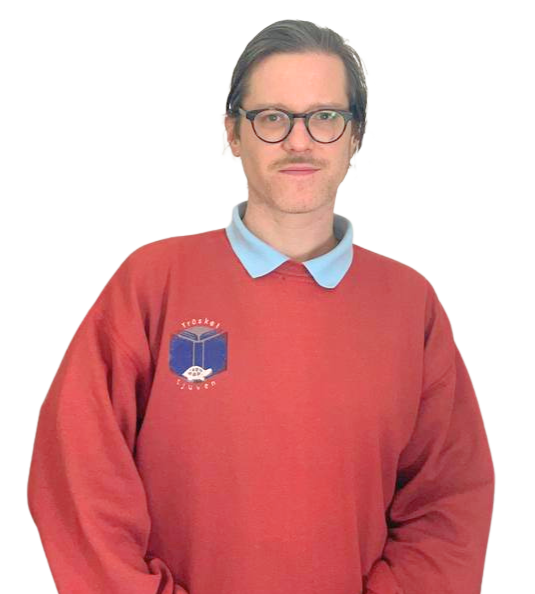
You can find me in Vienna, where I teach Swedish and write stories. If you don’t live in Vienna, you can also find me online. When I’m not teaching, you’ll likely find me in one of Vienna’s many cafés—writing, thinking, exploring, and perhaps occasionally giggling.
My teaching experience and my life here in Vienna have shaped the way I think about language and language learning. It is not an easy thing to stand on the threshold between two languages—especially when you live in another country and depend on that foreign language. It is not only about participation. You also want to be able to express yourself. To be a whole person—not half, or somehow estranged.
For many years now, I have been working on ways to learn Swedish with a little less suffering and a little more joy. I am writing an adventure story about a turtle who one day misses the bus and is picked up by a dragon. I work associatively and with a focus on meaning, so that words become alive and usable. At the same time, it is important to me to work pragmatically, so that language learning remains accessible to everyone.
Every human being is a creature of language.
Hej!
My courses
Planned courses in Vienna: Wintersemester 2026
VHS Alsergrund:
Schwedisch B1
Dienstags 17:30 bis 19:00 Uhr.
Schwedisch A1+
Donnerstags, 9:00 bis 10:30 Uhr
Schwedisch A1
Donnerstags 17:30 bis 19:00 Uhr
Schwedisch C1
Donnerstags von 19:15 bis 20:45
VHS Josefstadt:
Schwedisch A2+
Dienstags 19:30 bis 21:00 Uhr.
Sprachenzentrum der Universität Wien
Schwedish A2 – Phase 1
Montags 18:00-20:30 Uhr
Schwedish A1 – Phase 1
Mittwochs 18:00-20:30 Uhr
One-to-One Lessons on Request
Pricing:
5-lesson package – €210 (€42 per lesson)
8-lesson package – €312 (€39 per lesson)
15-lesson package – €555 (€37 per lesson)
One lesson = 50 minutes.
Lessons are also available for pairs.
Other Clients
Heidelberg University
The Austrian Armed Forces
Other companies, including Wiener Städtische Insurance, and many more.
What is my goal?
I want to support people – regardless of whether they are just beginning their language journey or have already reached an advanced level – especially when they are struggling with vocabulary or finding their way into the Swedish language.
It doesn’t matter whether you are learning Swedish on your own or as part of a course. My goal is to provide a tangible way into the Swedish language and to help you develop a lively and active relationship with it.
How do I want to do that?
Below you will find my thoughts and ideas:
Learning materials and methodology
There are many good approaches to language learning and many well-designed courses. My materials are not necessarily intended as a replacement, but rather as a complement. From a grammatical perspective, Swedish is actually not a particularly complicated language. The greatest difficulties often lie elsewhere: at the beginning, especially in sentence structure, pronunciation, and above all in building a living vocabulary.
For me, a curious exploration of the language is at the heart of the learning process. In my courses, this often happens through associative or “world-naming” conversations, accompanied by additional materials and different types of texts.
I am deeply convinced that one of the most valuable – and most exciting – ways to learn a language is through stories. Stories make it easier to remember content, and words are easier to understand when they appear within a clearly formulated narrative. In a story, I can also invent situations and scenes in which words become visible and unfold their meanings. This allows them to stay in your memory more easily than as empty words without any context.
The combination of associative and world-exploring naming on the one hand, and a language adventure structured through stories on the other, creates a deeper and more lasting connection with the language.
If you would like to learn more about my methodology and take a look at my learning materials, you can follow this link or click on “Material” above.
Vocabulary: More Than Just Words?
Why vocabulary lists often end up in the drawer.
Words are confusing!
(before you know what they mean)
The so-called “semantic confusion” accompanies many people when learning a language. It is completely normal and not necessarily something negative – rather, it is simply part of the learning process. The words are somehow there, but they often remain difficult to grasp. When reading, this usually goes largely unnoticed because the words are already there in front of you. As soon as you want to speak yourself, however, that is no longer enough. Words then need to be connected to ideas, experiences, or concrete content.
When we speak, a thought comes first – and only then does the search for the right word begin. If the language is not yet sufficiently connected to our own world of experience, our vocabulary often remains passive. We recognize words and understand them, but we cannot use them spontaneously. Instead of speaking, we often remain silent. This can be frustrating, because at the same time we have the feeling that we actually already know quite a lot.
So how can we turn a passive vocabulary into an active one?
I have given this some thought.
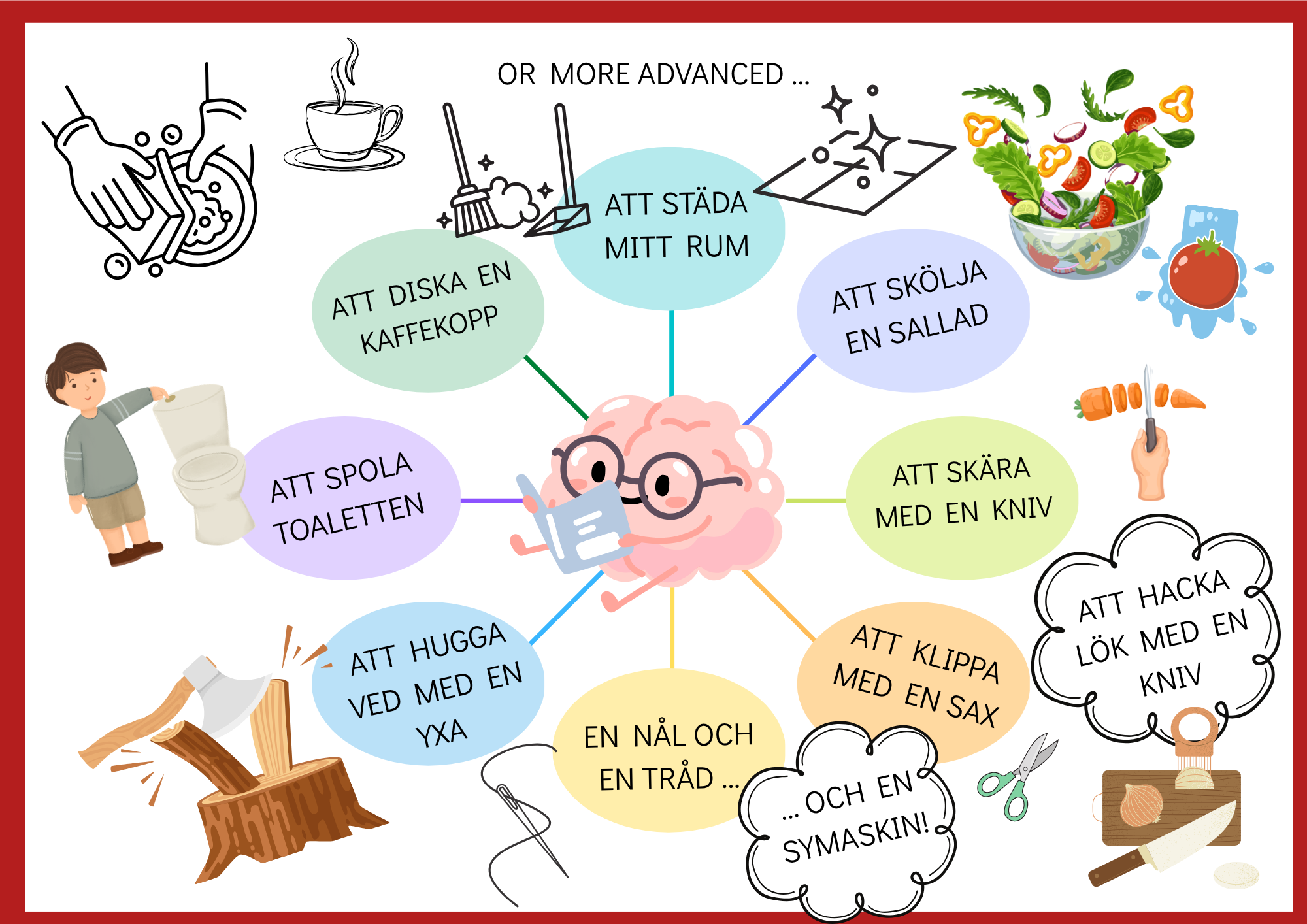
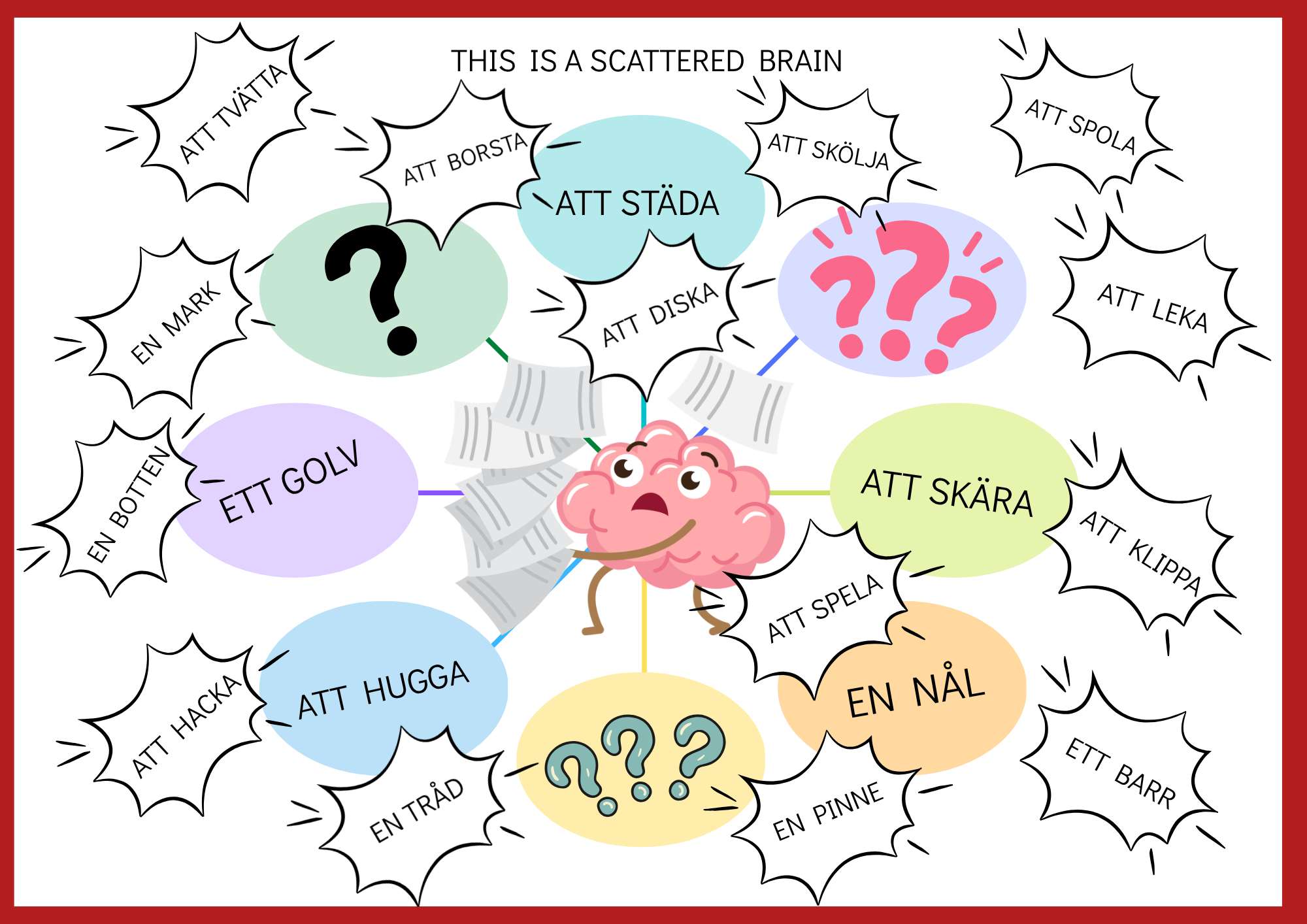
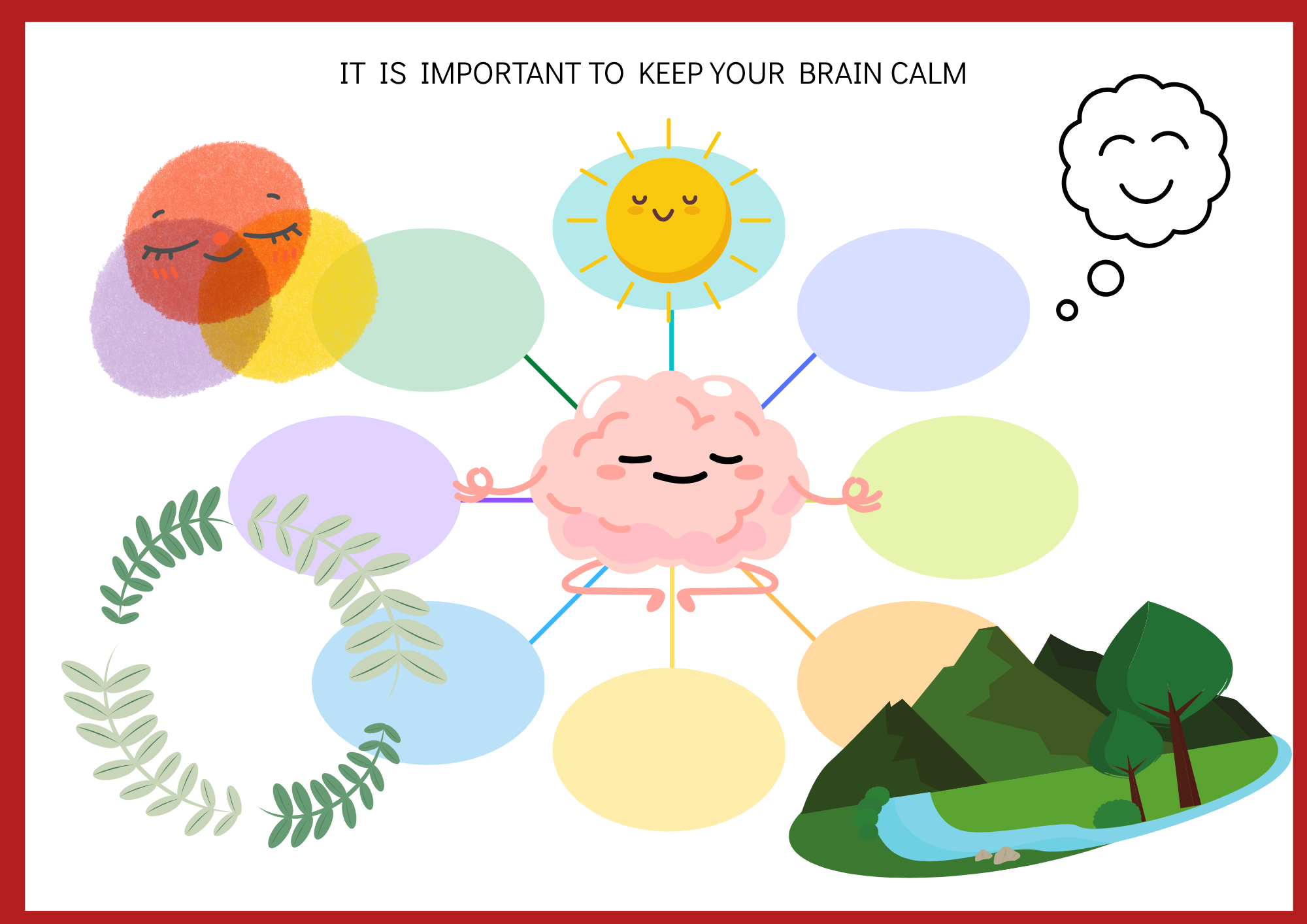
Semantic confusion.
Semantic confusion is a completely normal phenomenon when learning a foreign language.
But I believe this process can be accelerated somewhat…
(Re)naming the World
Vocabulary lists often end up in a drawer because, on their own, they simply do not mean enough. Anyone learning a foreign language realizes sooner or later that the words of different languages do not always fully correspond. They overlap, but they are not identical. They share a meaning, while at the same time meaning something else as well. The problem is not just that one word sometimes has to be translated using two or three different words. More problematic is that each of those words can in turn take on other meanings. So we are dealing not only with overlaps, but also with branching meanings and shifts. The result is often confusion: disorientation, unclear thinking, or even an inability to find the words to speak.
Translations promise clarity and orientation, but in the end they often lead to uncertainty. The effect creeps in gradually. You understand the words – and yet, when speaking, you still have the feeling that you cannot quite grasp what they really mean. Words rarely make sense in isolation. The Swedish word frisk is often translated as “healthy.” But how does it come that frisk luft does not mean “healthy air,” but “fresh air”? And is fresh air really “fresh” in the same way that fresh vegetables are? And why do we say that bread is “freshly baked,” while in Swedish you have to say nybakat bröd – literally, “newly baked bread”? These seemingly small differences reveal how differently languages organize meaning.
And this is exactly where actual language learning begins. Not the language that you can just about understand when reading, or the language that you gradually decipher over the course of years. Not the language of memorized phrases that get you through a restaurant visit, but the language you want to acquire and make your own – a language in which you feel like a whole person.
It all has to do with a conflict between systems. Let me explain that in a little more detail:
The Swedish Word Web
This is not a new topic. Linguistics has been concerned with it for a long time, and large parts of philosophy and literature also revolve around the relationship between the world and language. There is no need to take these considerations all the way to the boundaries of philosophy of language or end up with the sound poems of Dadaism. Nevertheless, there is an important insight to be found here: words and meaning are not the same thing.
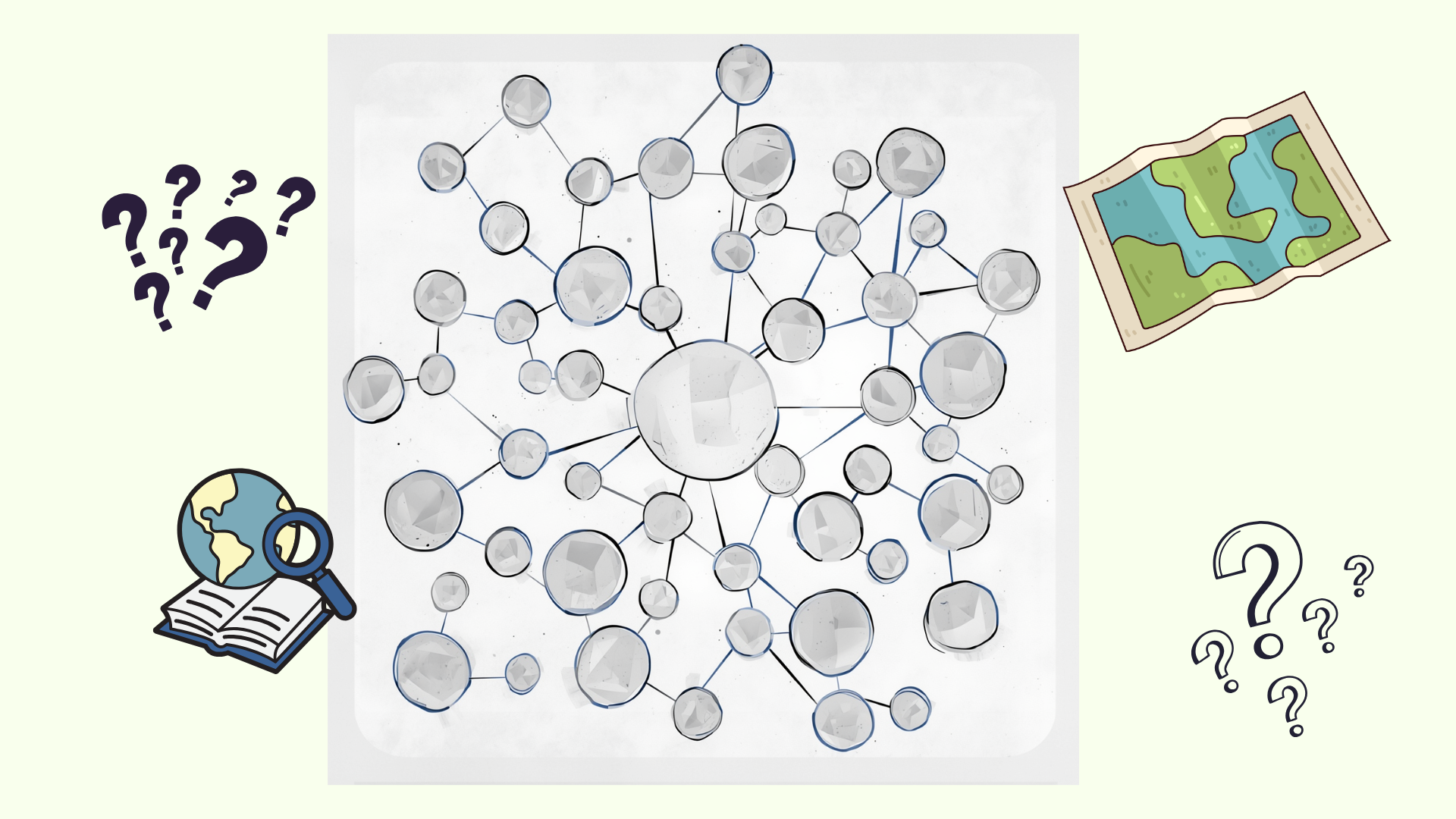
If you think of vocabulary primarily as a collection of words, learning a language can often feel like hard work. You cram vocabulary, review flashcards, and make small amounts of progress – but at some point, your motivation starts to fade. Eventually, the question arises: How many words do I actually need to know? Five thousand? Ten thousand? Fifty thousand? And wouldn’t eighty thousand, or even two hundred thousand, be even better?
Then you meet people who speak four, six, or even eight languages (I only speak three well, and perhaps one or two more just about well enough), and you start wondering: How did they manage that? Did they spend years doing nothing but memorizing vocabulary lists? Are they language geniuses? Do they have an extraordinary memory or an IQ of 200?
And at some point, your attention turns back to yourself. Maybe I think: I’m just not cut out for this. I can’t learn a language. I’m too old. It’s too late. I’m not intelligent enough. I don’t have the time. I need to go to the country first – there’s nothing I can do right now.
I find that profoundly sad. Because neither age nor intelligence actually plays such a major role in language learning. Two qualities that, in my view, play a much greater role are curiosity and openness.
What do we mean by learning words?
It is easy to lose sight of what words actually do: they describe the world. And you already know the world.
This is exactly where my approach begins.
You do not have to learn the world all over again – in a certain sense, you mainly have to name it differently. The point of reference is not the words themselves, but their meanings. Words are different ways of referring to the same or similar experiences, objects, actions, and relationships. It is meanings that give rise to the web of linguistic connections.
When we learn vocabulary, we can make use of exactly this. Much of what we talk about is already familiar to us. So we do not have to understand a completely new content every time. Often, it is simply a matter of learning a different linguistic expression for something we already know. A bird remains a bird, even if we give it a different name. An action remains, at its core, the same action. And a relationship does not simply disappear just because the language changes.
In this way, we can learn many words – as long as what we are talking about remains clear as a meaning. Perhaps this sounds confusing or overwhelming at first. I would cautiously argue the opposite: the world itself can provide you with an important point of reference. You can hold on to it. A bird does not lose its wings just because I talk about it in Japanese. The world remains largely the same. What changes are the words we use to refer to it.
And this can be helpful when learning a language. What are you actually trying to achieve when you learn a new word?
When you read a text, it is still relatively easy. You see an unfamiliar word, look up its meaning, and can then understand the sentence. But you do not want to merely read a language. You want to speak it.
And that changes the task. When speaking, the word is not there in front of you. You have to produce it yourself. You have to find a way from what you want to say to the linguistic expression that the other person will understand. If you have never named that meaning before, how are you supposed to know what the correct word for it is?
This is where it gets interesting: it is not necessarily about learning the world anew. Rather, it is about finding new linguistic paths to things that are already known, or at least familiar.
And yet comparing one language with another can quickly lead to confusion. Words do not always line up one-to-one. A word in one language may cover a range for which another language has several different words. Conversely, a single word may have several meanings that are divided among several words in another language. Meanings can shift, overlap, or branch out in different directions.
When we focus only on word-for-word correspondences, it is easy to lose sight of our actual point of reference. We then try to work out the meaning of one word from other words, which in turn have to be explained through yet more words. The word remains caught up with the word, so to speak – and the connection to what it actually refers to becomes weaker and weaker.
We become, so to speak, blind to the world. And that is a horrible feeling. The world is still there, of course, but it no longer serves as our point of reference. Everything becomes increasingly abstract: one word refers to another, which refers to another – and eventually we may know which words are connected to one another, but no longer what we are actually supposed to do with them. This is precisely where many of the confusions that can make language learning unnecessarily difficult arise. Not because the world has become more complicated, but because we increasingly orient ourselves within the web of words rather than in what those words describe.
At the same time, there is another web that begins to emerge. Once we start learning a new language, we gradually become familiar with a new network of words and meanings. It describes much of the same world, but it does not organize that world in exactly the same way as the web we bring with us from our first language. The connections are different. Some overlap, some diverge, and some do not exist at all in quite the same form.
The confusion arises when we lose sight of the world that lies beneath these different webs of words. A word should not only lead us to another word. It should also lead us back to what it describes.
Confusion arises where a word loses contact with its meaning.
Thank you very much for taking the time to read this text.
And that’s not a bad thing at all!
So what does this mean for “learning vocabulary”?
You don’t have to learn or store an entire world all over again.
The world remains the same. Only the linguistic order is different.
And this order does not have to be logical. It simply developed and became established over time.
Let’s explore it together!
What Do I Want to Build?
I want to share many of the things I have developed and make this website a place where I can share my thoughts and materials.
I want to make these materials available in digital form, so that you can use them to learn independently – with clear guidance in the form of videos and exercises. At the same time, you can also use them alongside another language course.
Later on, I would like to build specialized companion courses around them, where we can work more deeply with the material and apply the approach in a more focused way.
On this website, you will find:
Tröskeltjuven, my blog about the Swedish language and my thoughts on it.
A closer exploration of language and philosophy.
Materials that you can explore and try out for yourself.
Read about my philosophy.
Thoughts on the Cosmos.
My blog posts
What does everything mean?
Do you want to support me?
Tell others about me.
Join one of my courses.
Or support my work later by purchasing the digitalized materials.