Lernmaterial
(Scroll down for English)
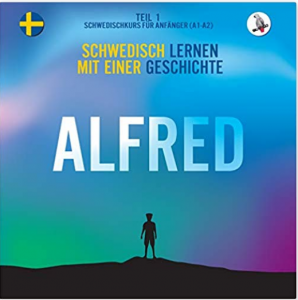
Alfred – Schwedisch lernen mit einer Geschichte
Das Lehrbuch „Alfred“ ist sowohl auf Deutsch als auch auf Englisch erhältlich. In Zusammenarbeit mit dem Verlag Skapago habe ich dieses Lehrwerk entwickelt, um das Sprachenlernen spannender und zugänglicher zu gestalten. Mein Schwerpunkt lag dabei auf der Entwicklung und Ausarbeitung der Geschichte. Ergänzend dazu gibt es einen Online-Begleitkurs, der es ermöglicht, den Lernstoff selbstständig und im eigenen Tempo zu vertiefen.
Hier ist der Link falls du interessiert bist!
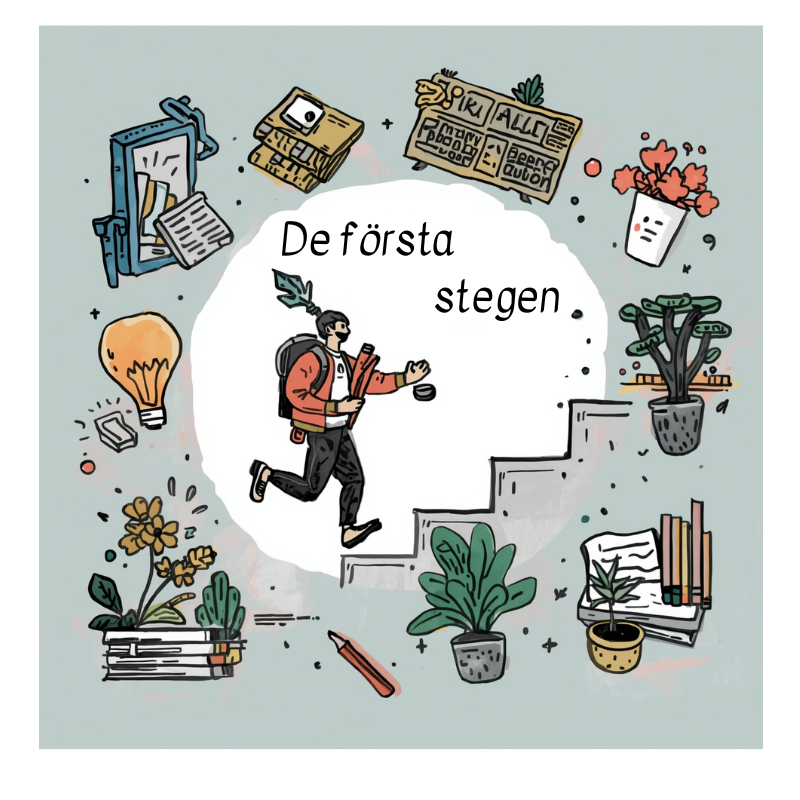
Wie fängt man an Schwedisch zu lernen?
De första stegen (die ersten Schritte) stehen ganz im Zeichen eines pragmatischen Zugangs, der es ermöglicht, von Anfang an ins Sprechen zu kommen. Dabei werden grundlegende Aspekte wie Aussprache, Satzstellung und Wortschatz systematisch eingeführt. Durch einfache Konstruktionen wird der Einstieg erleichtert, sodass die ersten eigenen Sätze schnell gebildet werden können. Der Wortschatz wird zudem assoziativ vermittelt, um das Lernen intuitiver und nachhaltiger zu gestalten.
Das Material geht von folgender Fragestellung aus:
Was brauche ich um einen Satz zu sagen?
Ich muss wissen, wie die Wörter ausgesprochen werden.
Ich muss wissen, in welche Reihenfolge sie kommen sollen.
Und dann brauche ich Wörter.
Erfreulicherweise ermöglicht Schwedisch mit seiner vergleichsweise einfachen Grammatik, schon früh sinnvolle und gut formulierte Sätze zu bilden. Diese Erkenntnis hat es mir erlaubt, den Einstieg in die Sprache möglichst reibungslos zu gestalten. Mit De första stegen arbeite ich immer am Anfang meiner Kursen und es ist ein gutes Fundament, worauf man den nächsten Schritt dann bauen kann.
Nästa steg:
Sagan om Alfons
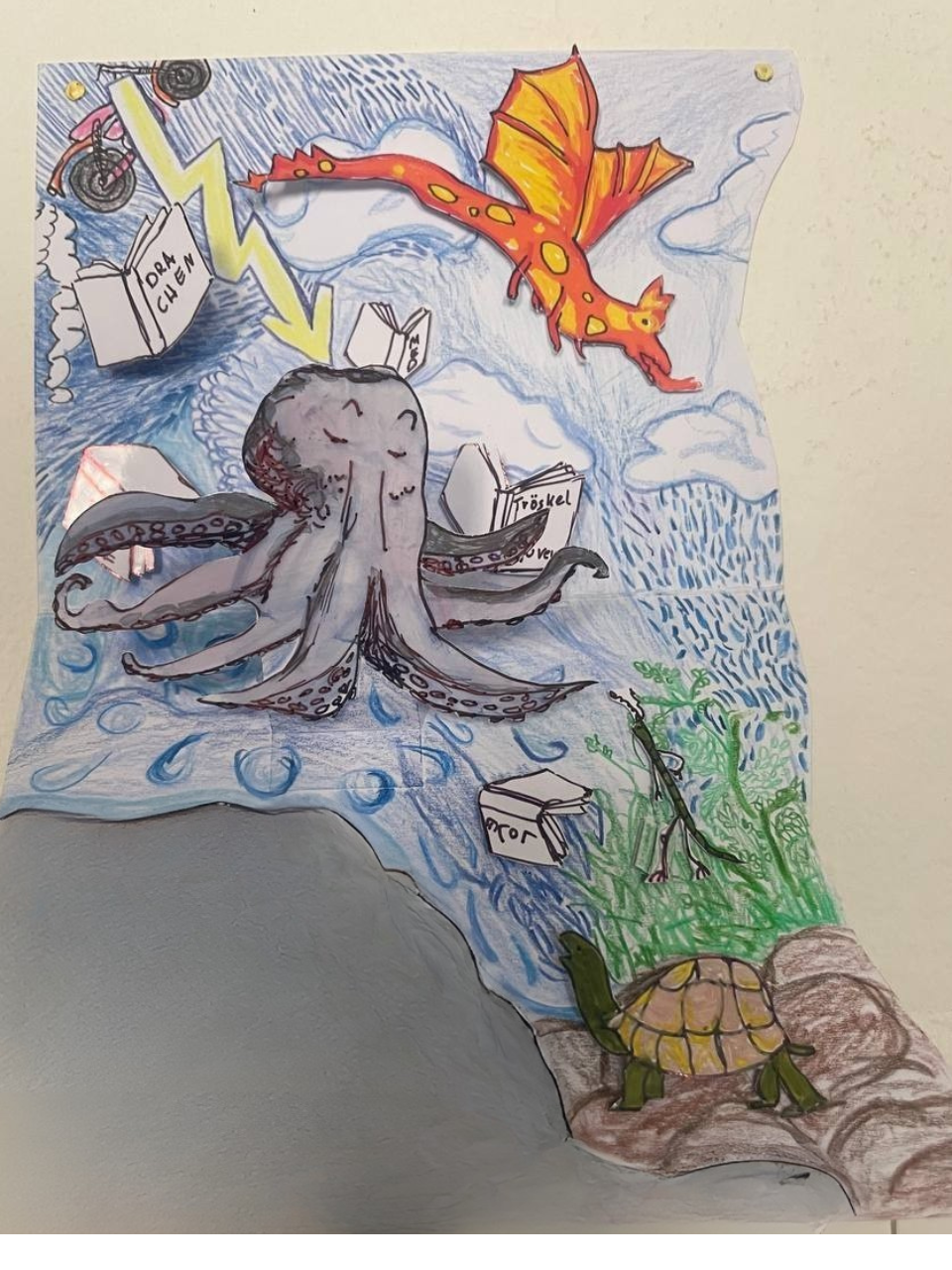
Eines Morgens verpasst die Schildkröte Alfons den Bus, weil sein Wecker (nicht Alfons!) verschläft. Dann kommt aber der Drache Orvar auf einem Moped und bietet seine Hilfe an. Was daraufhin passiert, stürzt Alfons in ein großes Abenteuer.
Sagan om Alfons ist ein kreatives Wortprojekt, das als Vokabel- und Grammatikübung entstanden ist. Im Laufe des Projektes ist aber viel mehr daraus geworden. Die Geschichte erschafft ein eigenes Sprachuniversum: Mal ist sie assoziativ erzählt, mal übernehmen zufällige Wortverbindungen das Ruder und eröffnen neue Bedeutungsebenen. Viele Wiederholungen helfen außerdem dabei, den Wortschatz besser zu behalten und nach und nach zu erweitern.
Zusammen mit meinen anderen Texten bildet Sagan om Alfons einen Wortkosmos, der Stück für Stück, Faden für Faden, Lichtstrahl für Lichtstrahl die schwedische Sprache aufbaut, zusammennäht und erhellt. Beim Schreiben entdecke ich selbst ständig Neues, und über die vielen Beispielen hinaus kann ich immer nebenbei auf interessante sprachliche Details eingehen. Dieser Text ist für mich ein kreatives Wortprojekt, bei dem ich meine Sprache erforsche und auf Spurensuche gehe.
Zwischen den Zeilen – in Figuren, Ereignissen und Metaphern verpackt – versuche ich außerdem, Reflexionen und Gedanken über das Sprachenlernen zu vermitteln. Einen großen Teil meiner Kurse strukturiere ich um diese Geschichte herum, und nun möchte ich sie auch mithilfe von Erläuterungen, Videos und Übungen mit Menschen teilen, die keinen Kurs bei mir besuchen.
Was die Grammatik betrifft, behandelt die Geschichte vor allem Verbformen und Adjektive. Diese werden komplexer, je weiter man im Text voranschreitet. Gleichzeitig werden aber auch andere spannende sprachliche Details behandelt und kreativ eingebaut. Ich habe festgestellt, dass Verbformen und Adjektive mehr Übung erfordern als andere Bereiche der Grammatik. Die Anzahl der Pronomen – ob Subjekt-, Objekt- oder sogar reflexive (!) Possessivpronomen – ist schließlich überschaubar. Bei Verben hingegen kann immer ein neues auftauchen, und vielleicht ist es sogar unregelmäßig!
Ett textflöde om allt och inget.
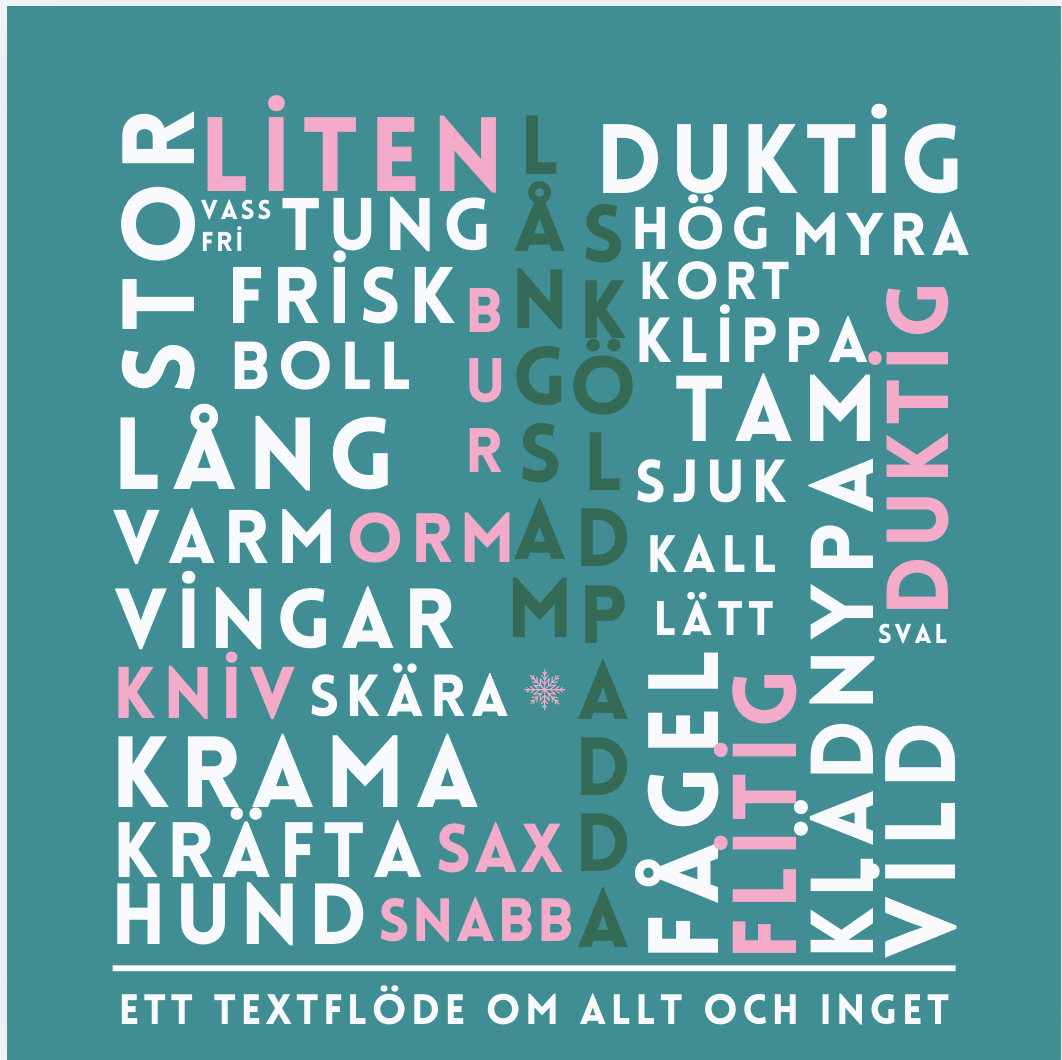
„Ein Textfluss über alles und nichts“ – so heißt mein erster assoziativer Text. Er beginnt mit den grundlegenden Adjektiven. Doch was bedeuten diese Wörter wirklich? Wer hat zum Beispiel entschieden, dass man im Deutschen mit dem Wort „groß“ beschreibt, wie lang ein Mensch ist? Warum sagt man nicht einfach „lang“ oder „hoch“? Und ist „schneiden“ wirklich nur ein einziges Wort? Und warum bedeutet das schwedische Wort „frisk“ nicht nur „frisch“, sondern manchmal auch (aber nicht immer!) „gesund“?
Wenn man von Bedeutungen und von der Welt ausgeht, werden Wörter greifbarer. Sprache besteht nicht nur aus Gegensätzen wie groß–klein, lang–kurz oder hell–dunkel; und Übersetzungen können manchmal sehr verwirrend sein. Stattdessen habe ich mich gefragt, mit welchen anderen Wörtern die schwedischen Adjektive wie „stor“, „liten“, “vass” oder eben „frisk“ in Verbindung stehen – und dabei einige sehr interessante Zusammenhänge entdeckt, die sonst beim Lernen oft verborgen bleiben. Leider übersieht man leicht Wörter, wenn man allzu wortfixiert ist. Wenn kein Inhalt da ist, wird man leicht blind.
Munsbitar – kleine Häppchen oder „Mund-Stücke“
Ähnlich wie beim Textfluss bin ich in meinem Unterricht in einem ständigen Dialog. Dabei greife ich gerne auf grammatische Strukturen zurück, die wir bereits kennen. Diese Strukturen bilden sozusagen das Gerüst. Darin entwickle ich ein inhaltliches Thema, das wir genauer untersuchen und mit dem wir uns verschiedene Wörter und ihre Bedeutungen erschließen. Die Grammatik ist also bereits bekannt – neu ist das, was wir in diese Strukturen hineinlegen. Inhaltlich strukturiert, aber assoziativ.
Solche kurzen Häppchen möchte ich auch in Audioform anbieten. Kleine sprachliche Einheiten, in denen sich vieles von dem, was man sonst in einem Kurs lernen oder thematisieren würde, nebenbei einbauen lässt. Dadurch wird das Ganze stringenter und die einzelnen Teile können immer wieder miteinander verbunden werden.
Vielleicht frage ich dich einfach, wie es dir geht. Und vielleicht entdeckst du dabei, dass du, wenn du traurig bist, nicht auf dieselbe Art traurig bist wie ein Film traurig ist.
Das – und vieles mehr!
Smakprov
Här kommer snart smakprov. Under 2026.

Skapago: Alfred.
De första stegen.
Sagan om Alfons.
Textflöden.
Munsbitar.
Blogg.
Kurser.
In English:
Study material
Alfred – Learning Swedish Through a Story
The textbook “Alfred” is available in both German and English. In collaboration with the publisher Skapago, I developed this coursebook to make language learning more engaging and accessible. My main focus was on developing and writing the story.The book is complemented by an online course that allows learners to deepen their understanding of the material independently and at their own pace.
Here is the link if you’re interested!
How do you start learning Swedish?
De första stegen (The First Steps) takes a pragmatic approach, designed to get you speaking from the very beginning. Basic aspects such as pronunciation, word order and vocabulary are introduced systematically. Simple structures make it easier to get started, allowing you to form your first sentences quickly. Vocabulary is also introduced associatively, making the learning process more intuitive and sustainable.
The material is based on one simple question:
What do I need in order to say a sentence?
I need to know how the words are pronounced.
I need to know in what order they should come.
And then I need words.
Fortunately, Swedish has a comparatively simple grammar, which makes it possible to form meaningful and well-structured sentences at an early stage. This insight has allowed me to make the introduction to the language as smooth as possible.
I use De första stegen at the beginning of my courses. It provides a solid foundation on which the next step can be built.
Sagan om Alfons
One morning, the turtle Alfons misses the bus because his alarm clock (not Alfons!) oversleeps. Then the dragon Orvar arrives on a moped and offers to help. What happens next sends Alfons on a great adventure.
Sagan om Alfons is a creative word project that began as a vocabulary and grammar exercise. Over the course of the project, however, it grew into something much more. The story creates its own linguistic universe: sometimes it is told associatively, sometimes random combinations of words take over and open up new layers of meaning. The many repetitions also help learners retain vocabulary and gradually expand it.
Together with my other texts, Sagan om Alfons forms a word cosmos that builds, stitches together and illuminates the Swedish language piece by piece, thread by thread, ray of light by ray of light. I constantly discover new things myself while writing, and beyond the many examples, I can use the text to explore interesting linguistic details along the way. For me, this text is a creative word project in which I explore my language and go searching for traces.
Between the lines – woven into characters, events and metaphors – I also try to convey reflections and thoughts about language learning. I structure a large part of my courses around this story, and now I would like to share it with people who do not attend one of my courses, using explanations, videos and exercises.
As far as grammar is concerned, the story focuses primarily on verb forms and adjectives. These become more complex as you progress through the text. At the same time, other interesting linguistic details are explored and creatively woven into the story. I have found that verb forms and adjectives usually require more practice than other areas of grammar. After all, the number of pronouns – whether subject, object or even reflexive (!) possessive pronouns – is fairly limited. With verbs, on the other hand, there can always be another new one, and perhaps it is even irregular!
Ett textflöde om allt och inget.
“A stream of text about everything and nothing” – that is the name of my first associative text. It begins with some basic adjectives. But what do these words actually mean? Who decided, for example, that the English word “tall” should describe the length of a person? Why not simply “long” or “high”? And is “to cut” really just one word? In Swedish, both skära and klippa can be translated as “to cut” – but they are not interchangeable in every situation. And is fresh air fresh in the same way that vegetables are fresh? How is it that the Swedish word frisk can also mean “healthy” – but not in the sense of healthy food, rather in the sense of not being sick?
When we start from meanings and from the world around us, words become more tangible. Language is not simply made up of opposites such as big–small, long–short or light–dark, and translations can sometimes be very confusing. Instead, I began to wonder which other words are connected to Swedish adjectives such as stor, liten, vass and frisk – and in doing so, I discovered some very interesting connections that often remain hidden when learning a language.
It is easy to overlook words when we become too focused on words themselves. When there is no content behind them, it is easy to become blind.
Munsbitar – little bites or “pieces for the mouth”
Similar to the text flow, my teaching is based on a constant dialogue. I like to work with grammatical structures that we already know. These structures provide a kind of framework. Within that framework, I develop a topic that we explore more closely, using it to discover different words and explore their meanings. The grammar is already familiar – what is new is what we put into these structures. Structured in terms of content, but associative.
I would also like to offer these short little bites in audio form. Small language units in which I can incorporate many of the things that we would otherwise learn or discuss in a course. This makes the whole thing more coherent, while allowing the individual pieces to connect with one another again and again.
Maybe I simply ask you how you are feeling. And maybe you discover that when you are sad, you are not sad in the same way that a film is sad.
That – and much more!